
The Binge Free Formula Framework
An evidence-informed approach to break free from binge eating, BED and bulimia without diet, rules or shame.
How It's born
13 Years of Struggling
For 13 years, I was living with binge eating without knowing. Tried diet after diet, hoping the next one would be different.
The difference it made? More out of control
Dietetic Training
When I was trained as a dietitian, I learned all about the 'healthy eating' and proper nutrition - but I was still struggling.
That's when I realised: This wasn't just about what to eat. It's about healing my relationship with food
Eating Disorder Training
My journey to becoming a Credentialed Eating Disorder Clinician is pretty much my own self-help diary.
As I went through ED training, I uncovered one deeper struggle after another, searching for solution after solution.
After 5 years of diving deep into self-help, I've reached recovery in my own term
Creating BFF
When I started working with clients struggling with binge eating, I knew they didn't need another lecture on "eating healthier." They needed a holistic approach that actually addressed why they were bingeing in the first place.
So I created the Binge Free Formula—a framework that brings together everything I learnt through my own 13-year recovery and years of recovery + ED training into a clear, compassionate roadmap for recovery.
A Different Way forward
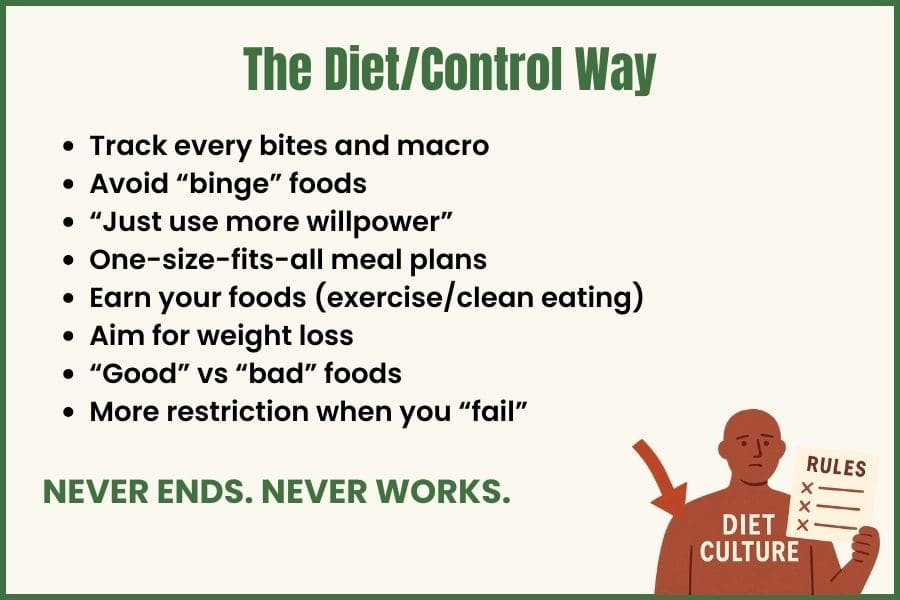
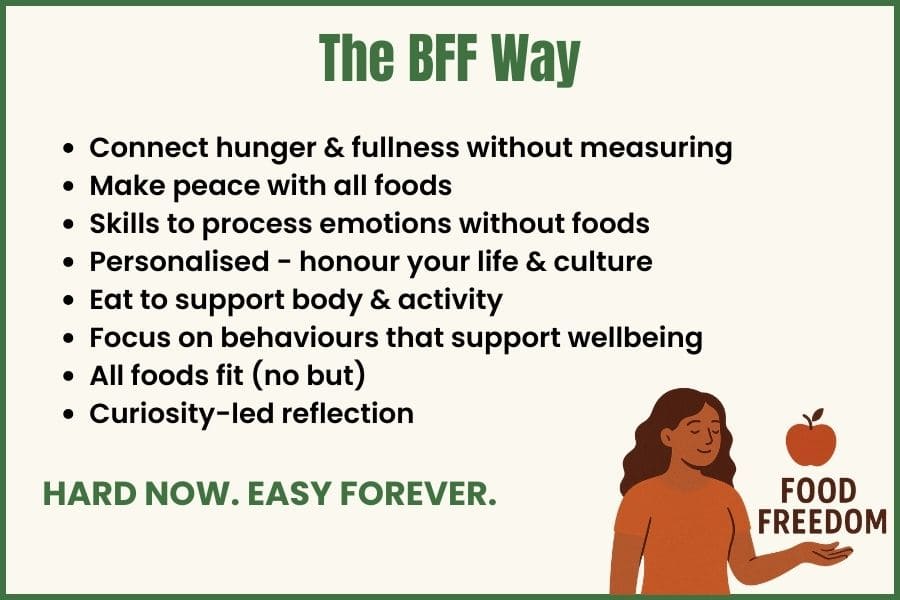
You've already tried controlling food. Let's try something that actually works - rebuilding trust.
The Foundation - How This Approach Works
Most binge eating 'solutions' fail because they focus on WHAT you eat - meal plan, macros, portion sizes - but ignore the WHY - what's driving the behaviour
The Binge Free Formula is built on principles that actually support healing the "behind the scene" of your eating, not another 12-week nutrition plan that falls apart the moment it ends
#1 Anti Diet
Coming from traditional healthcare training, I used to prescribe meal plans and portion control—until I saw how the rules themselves were the problem.
Anti-diet means letting go of 'good' and 'bad' foods, earning your meals, or using willpower to stay in control. When food loses its moral labels, there's no guilt, no forbidden pull—just freedom to eat and enjoy.
Why it works: You can't heal your relationship with food whilst still trying to control it."
#3 Person-Centred
You're the expert on your life—I'm here to guide
You've probably had professionals tell you exactly what to eat, when to exercise, and how to 'fix' yourself. That approach assumes they know your body better than you do.
Person-centred care flips that: you're the expert on your life, your body, and what works for you. I bring the skills, frameworks, and evidence—but you make the decisions.
This means our work together is:
- Collaborative – we figure things out together, not me prescribing from above
- Compassionate – replacing self-criticism with curiosity and kindness
- Individualised – what works is shaped by your life, culture, preferences, and goals—not a one-size-fits-all protocol
Why it works: Lasting change doesn't come from following someone else's rules. It comes from reconnecting with your own wisdom and building skills that fit your life.
#5 Whole Person Approach
Binge eating isn't just about food—and healing isn't either
Binge eating doesn't happen in a vacuum. It's connected to your emotions, stress, relationships, sleep, life transitions, nervous system—all of it.
A whole-person approach means we don't just focus on what's on your plate. We look at:
- What's happening in your life (work stress, relationship struggles, major transitions)
- How your body is coping (nervous system regulation, sleep, chronic health conditions)
- What you're feeling (emotions that drive the urge to binge)
- Your history (past dieting, trauma, cultural messages about food and bodies)
Why it works: When we address what's actually driving the behaviour—not just the symptom—healing goes deeper and lasts longer.
#2 Weight-Neutral
Your weight, BMI, or body shape don't determine your health, worth, or attractiveness.
Here's what I know: restriction fuels bingeing. And there's no truly non-restrictive way to intentionally lose weight.
Trying to heal your relationship with food whilst focusing on weight loss is like building trust with someone who keeps criticising you—it doesn't work.
Instead, we focus on behavioural changes and mindset shifts—the things that actually improve your health and quality of life—and let your weight settle where your body is most metabolically comfortable.
Why it works: When weight is off the table, you can finally focus on what actually helps—reconnecting with your body's signals and needs."
#4 Inclusive & Trauma-Informed Care
Healing starts with safety and autonomy.
Trauma-informed extend from the trauma leading to a disordered eating pattern. But also the diet trauma. How can you feel safe when your identity is judged? e.g.
- When your doctor blames everything on your weight.
- When influencers shame you for eating carbs.
- When you grow up never seeing your body type, skin colour, sexuality and gender identity—or culture—being honoured.
- When you don't feel safe in your body, you fight it, rebel, or shut down. That's how food and body struggles take over.
Why it works: In my practice, I create space where all parts of you are welcomed and respected—so you can rebuild trust with food and body on your terms."
#Health At Every Size
Growing evidence shows weight and BMI are poor predictors of health—and that health-promoting behaviours matter more than the number on the scale.
Health At Every Size is built on 5 principles:
1. Weight inclusivity – respecting body diversity
2. Health enhancement – improving access to care for all bodies
3. Respectful care – challenging weight stigma in healthcare
4. Eating for wellbeing – flexible, attuned eating based on hunger and satisfaction
5. Life-enhancing movement – joyful movement, not punishment
Why it works: When weight is no longer the focus, health becomes something you can build with freedom, compassion, and trust.
Phase 1: Build Safety
Help your body step out of survival mode
WHY
When your brain senses scarcity or threat - from dieting, restriction, or triggering moments - it flips into survival mode, driving urgency, cravings, and binges. You can't heal what feels unsafe
WHAT TO FOCUS ON
Understanding what's driving your binge eating and identify your triggers
Creating physical safety through consistent, adequate nourishment
Softening restrictive diet rules and letting go of dieting tools
Recognising how diet culture has shaped your relationship with food & body
PUTTING IN PRACTICE
Trace binge origins | Map triggers | Find Binge Function | Find recovery power | Build support network Eat regularly | Ensure adequate nourishment | Name diet rules | Challenge food rules | Stop restriction/purging | Declutter dieting tools | Understand diet culture | Learn weight science | Respond to diet talk
Phase 2: Build Trust
Reconnect with your body's signals and make peace with food
WHY
Just like a baby doesn't stop crying until you meet their needs, your body won't stop sending urgent signals until it trusts you'll listen and respond. Trust is rebuilt through consistent compassionate action, not willpower
WHAT TO FOCUS ON
Learn to notice and honour your body's hunger and fullness signals
Making peace with all foods through gradual, supported exposure
Understanding the difference between physical, emotional needs & habits
Developing skills to process emotions and stress without turning to food
PUTTING IN PRACTICE
Practice attunement | Develop self-compassion | Scan body hunger & fullness | Master mindful eating | Honour hunger cues | Respond to binges | Food habituation | Reframe critic thoughts | Abundance mindset | Build satisfying meals | Stop when full | Challenge food fears | Distinguish hunger types | Respond to urges | Understand emotional eating | Build emotion regulation skills | Soothe nervous system | Break automatic eating habits
Phase 3: Build Confidence
Create sustainable system that support your wellbeing
WHY
Confidence doesn't come from control - it comes from knowing you have the skills, flexibility, and resilience and navigate real life. In this stage, you build health-promoting habits that feel good and fit your lifestyle.
WHAT TO FOCUS ON
Shifting from body criticism to body respect & acceptance
Exploring gentle nutrition & flexible meal planning without rigid rules
Finding movement that feels joyful, not punishing
Building resilience to handle setbacks without spiralling
PUTTING IN PRACTICE
Challenge body criticism | Appreciate body function | Navigate triggering moments | Rewire body checking/avoidance behaviours | Body-positive fashion | Joyful movement | Honour rest | Gentle nutrition | Navigate special occasions | Meal planning + staple meals | Build pantry flexibility | Establish healthy habits | Identify risk situations | Turn lapses into learning | Practice recommitment
What will happen?
Eating With Ease
From: Walking on eggshells, losing control, and spiralling into guilt
To: Eating what you want without drama or panic - food is just food
Mental Freedom
From: Constant throughts about food, calories and when you'll binge
To: Headspace for your work, relationships and dream - food becomes the background & support
Normal Eating
From: Binge eating feels like your identity forever
To: Eating when hungry, stopping when satisfied, enjoying treats without drama
Confident Choices
From: Panic or overwhelm when cravings hit
To: Knowing exactly what your body need - skills and strategies to honour your body that works
Body Peace
From: Fighting, hiding, or feeling trapped in your body
To: Feeling at ease in your skin - less anxiety, more living
Life wellbeing
From: All-or-nothing cycle - perfect or chos between "good" and relapse
To: Habits that stick because they support how you want to live
What This Helps With
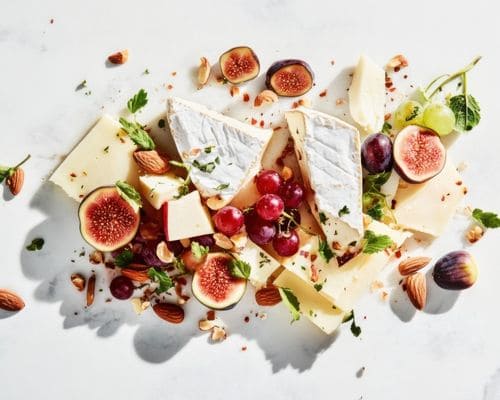



Is this right for you?
This is for you if...
You're tired of the binge-restrict cycle and ready to try something different
You want to stop obsessing about food and get your life back
Underneath, you can sense diet culture isn't what works for you and you want to challenge it, even part of you still resist it
You struggle with binge eating, bulimia, emotional eating, or feeling out of control around food
You're ready to do the deeper work - not just follow another meal plan
You want practical skills and support that will work or life, not just willpower or motivation pushes
You're open to rebuilding trust with your body, even if it feels scary
This is likely not for you if...
You're lookign for a quick fix or a structured meal plan to follow
You're primarily focused on weight loss right now
You're happy with how you're eating and just looking for nutrition optimisation or performance goals
The idea of giving up dieting, restriction, or food rules don't makes sense to you right now
You're looking for someone to tell you exactly what to eat
You prefer a control-based or tracking-based approach rather than learning to trust your body's signals
You're currently in acute crisis or need a higher level of medical or psychiatric care
Want to Implement This Approach?
Binge Free Formula Program
Implement the full framework with all-rounded support
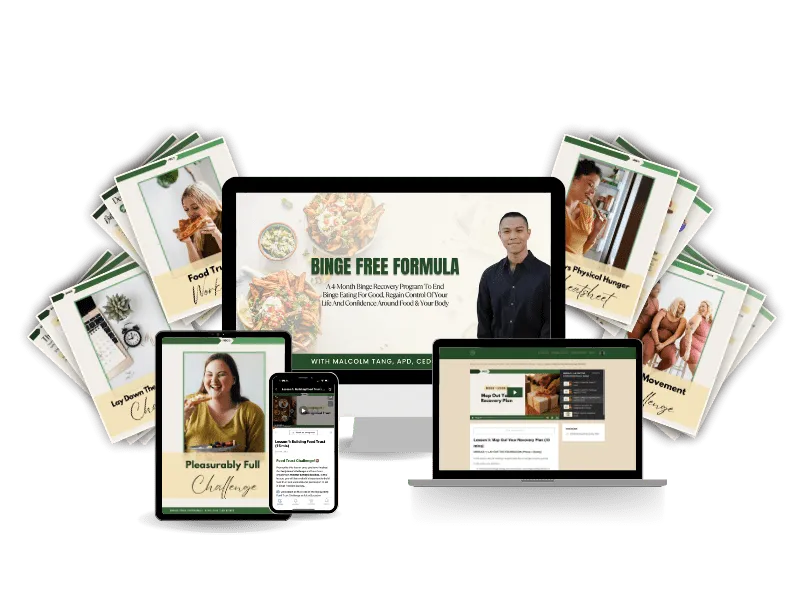
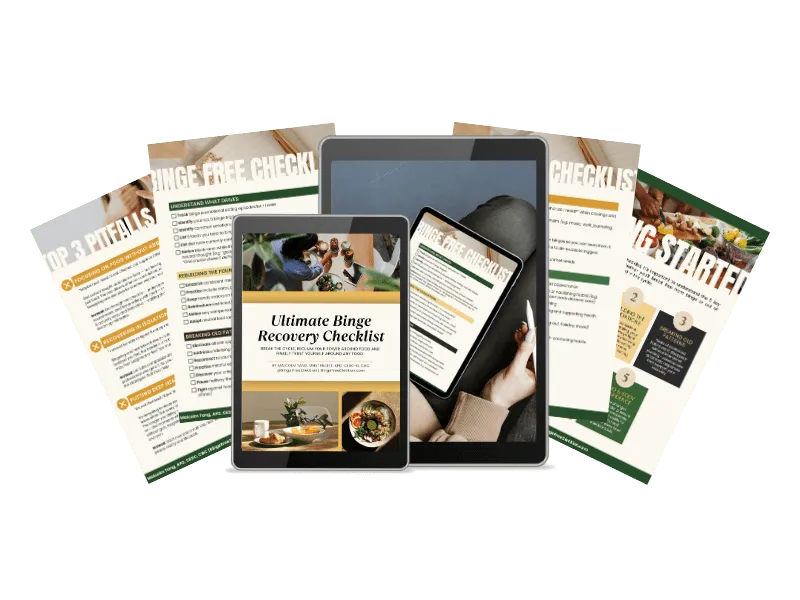
Ultimate Binge Recovery Checklist
What recovery looks like step-by-step with this FREE checklist
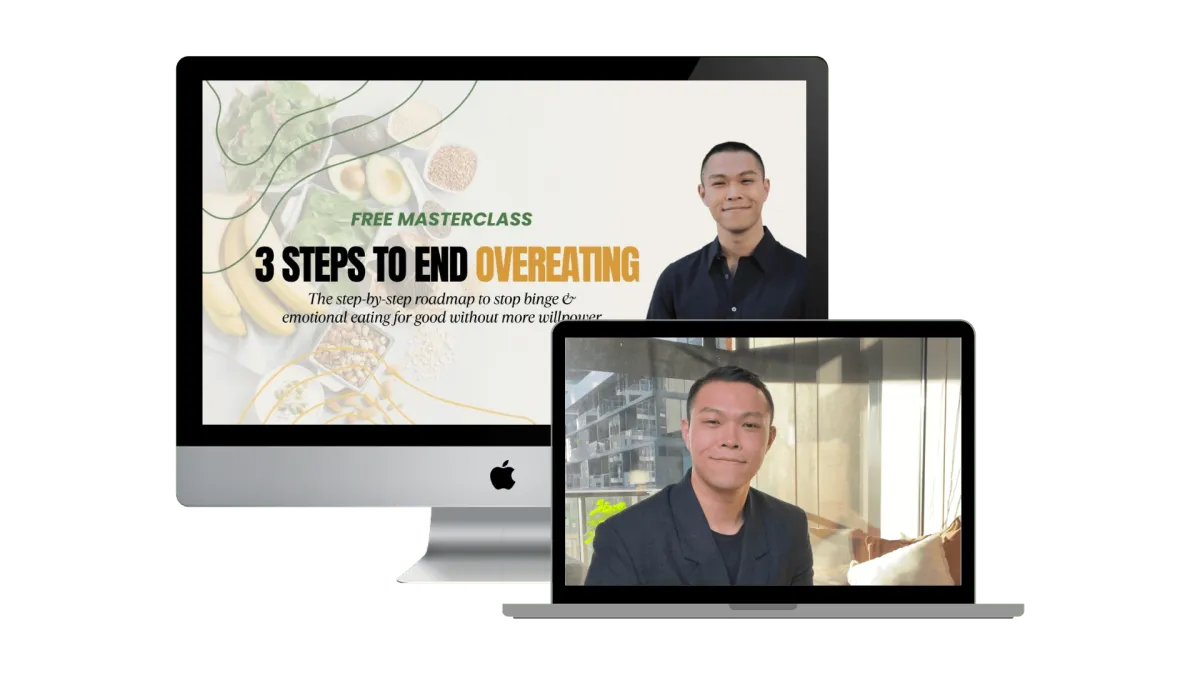
3 Steps To End Overeating
Learn why you're stuck and how to move forward with this free webinar
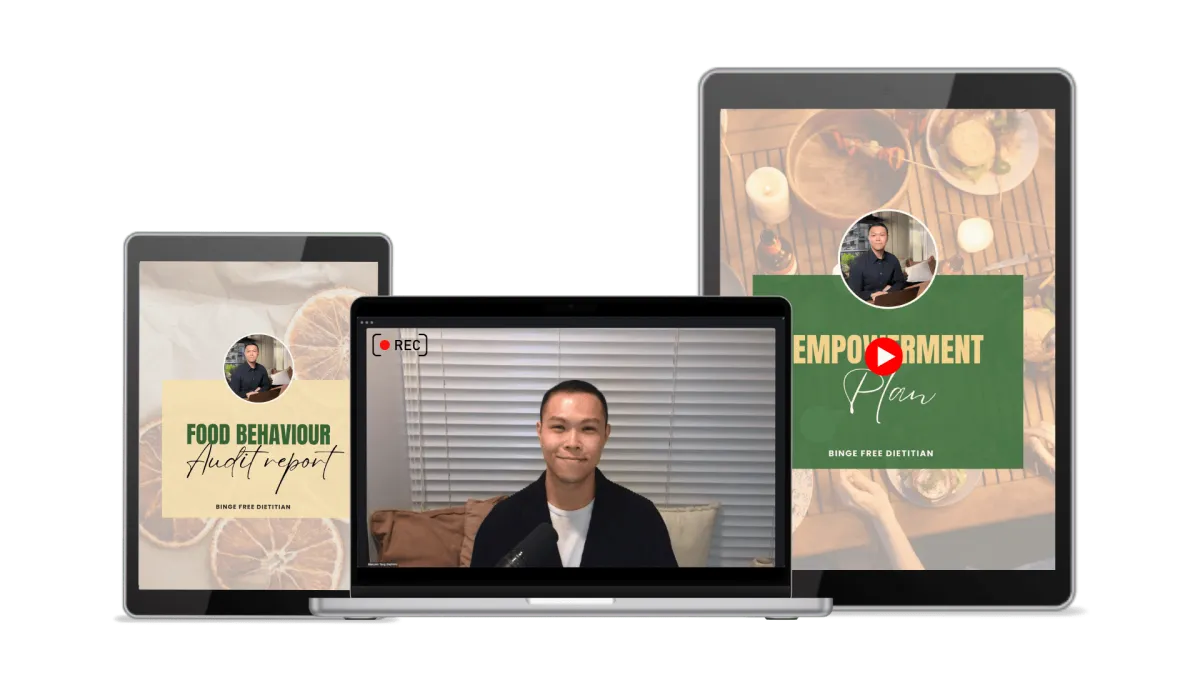
Empower Roadmap Session
Get a personalised BFF roadmap + action plan tailored to your situation
The Nerd Corner
The evidence-based treatment or modalities Binge Free Formula is informed by
RAVES
WHAT IT IS
A structured approach to establish regular eating patterns through five principles: eating Regularly, Adequately, with Variety, Eating Socially, and Spontaneously—creating the foundation for stable, nourishing eating.
IN BFF
Stage 1: building a regular eating pattern, breaking binge-restrict cycle, food habituation, relapse prevention
If we work together, we will also utilise Rules of 3's and Plate-by-Plate model - 2 most widely used meal structuring approach to stop bingeing.
EVIDENCE
Evidence shows regular, adequate eating reduces binge frequency and intensity by preventing the restriction-binge cycle and stabilising blood sugar and hunger hormones.
Non-Diet/HAES
WHAT IT IS
A weight-inclusive framework that shifts focus from weight loss to health-promoting behaviours, body acceptance, and intuitive self-care regardless of body size.
IN BFF
Throughout BFF, especially fighting diet mentality and gentle nutrition
EVIDENCE
Research consistently shows HAES interventions improve eating disorder symptoms, psychological wellbeing, and metabolic wellbeing.
Intuitive Eating
WHAT IT IS
An HAES approach that is built on fighting diet mentality, and rebuild trust with internal hunger-fullness cues and honouring body's needs without external food rules.
IN BFF
Throughout the BFF framework:
- Reject the diet mentality
- Honour your hunger
- Make peace with food
- Challenge the food police
- Discover the satisfaction factor
- Feel your fullness
- Cope with your emotions with kindness
- Respect your body
- Movement - feel the difference
- Honour your health with gentle nutrition
EVIDENCE
Over 200 studies show intuitive eating is associated with reduced binge eating, improved body image, lower psychological distress, and better physical health markers including blood pressure and cholesterol.
Self-Compassion (Kristin Neff)
WHAT IT IS
A practice of treating yourself with kindness during struggle, recognising suffering as part of shared humanity, and responding to yourself as you would a dear friend. (Based on Kristin Neff framework)
IN BFF
Stage 2: self compassion, treat emotion with kindness, post-binge reflection, make peace with food, body peace
EVIDENCE
Research demonstrates self-compassion reduces binge eating, body shame, and eating disorder symptoms whilst improving body appreciation, emotional resilience, and treatment outcomes—often more effectively than self-esteem interventions.
CBT-E
WHAT IT IS
An evidence-based treatment that uses cognitive restructuring and behavioural experiments (like food exposures and habituation) to challenge disorder thoughts and behaviours.
IN BFF
While this is not a CBT-E appraoch, some treatment steps and contextualisation is used to understand triggers and pattern, break binge-restrict cycle, food habituation, body image healing, habit building strategies, relapse prevention
EVIDENCE
CBT-E is the most researched treatment modalities for bulimia and binge eating disorder, with ~60% of people achieve remission and maintain improvements long-term.
DBT
WHAT IT IS
A skills-based therapy teaching emotional regulation, distress tolerance, and mindfulness to manage intense emotions without turning to destructive behaviours like binge eating.
IN BFF
Understand cravings, practical skills to manage urges and difficult emotions, trigger management
EVIDENCE
Research shows DBT significantly reduces binge eating frequency, emotional eating, and eating disorder psychopathology, particularly for those with emotion regulation difficulties.
ACT
WHAT IT IS
A mindfulness-based approach that teaches "unhooking" from unhelpful thoughts and urges whilst building values-based habits—accepting discomfort rather than fighting it.
IN BFF
Craving awareness, post-binge reflection, emotional regulation skill, build resilience to handle setbacks
EVIDENCE
Research shows that ACT helps reducing dysregulated eating behaviours (e.g. bingeing) and thoughts (body dissatisfaction) by improving psychological flexibility and reducing experiential avoidance around food and emotions
Mindfulness Approach
WHAT IT IS
Practices of present-moment awareness without judgement—noticing thoughts, emotions, body sensations, and urges with curiosity rather than reaction.
IN BFF
Hunger-fullness awareness, mindful eating
EVIDENCE
Meta-analyses show mindfulness-based interventions significantly reduce binge eating frequency, emotional eating, and external eating whilst improving body awareness and eating self-efficacy.
Body Image Healing
WHAT IT IS
Body image healing framework drawn from "More than a body", intuitive eating framework and Developmental Theory of Embodiment by Niva Piran
IN BFF
Body acceptance, criticism, function, avoidance, checking, and body image triggers
EVIDENCE
Research shows body image interventions reduce eating disorder symptoms, body dissatisfaction, and depression whilst improving self-esteem and quality of life—particularly when combined with eating disorder treatment.
Polyvagal Theory
WHAT IT IS
A neuroscience framework explaining how the nervous system responds to threat (fight/flight/freeze) and safety—helping you understand binge eating as a nervous system survival response, not a character flaw.
IN BFF
Building safety and nerve-calming techniques and emotional regulation skills
EVIDENCE
Emerging research shows polyvagal-informed interventions improve emotion regulation, reduce trauma responses, and decrease binge eating by shifting from threat state to safe and social states.
Motivational Invterviewing
(If you work with me 1:1)
WHAT IT IS
A collaborative, person-centred counselling approach that allow us to work through the internal struggle of want to change and want to stay. And it helps draw out your internal motivation to change rather than relying on external push.
IN BFF
Throughout the 1:1 work. In the framework: setting up safety net, define recovery power
EVIDENCE
Studies show MI largely improve therapeutic relationship - which research shows to be the no. 1 predictor to the treatment success in eating disorder and disordered eating. It also enhances adherence and improves outcomes when combined with other evidence-based approaches.
Medical Nutrition Therapy
(Mainly when we work 1:1)
WHAT IT IS
Evidence-based nutrition management for health conditions (cholesterol, diabetes, PCOS, hypothalamic amenorrhoea, gut symptoms) - what set dietitians apart from all other nutrition and health professionals
IN BFF
Gentle nutrition for different health conditions. Individualised therapy based on your health state if we work 1:1
EVIDENCE
Medical Nutrition Therapy is the most evidence-based approach to nutrition management to any health conditions.
Relapse Prevention
WHAT IT IS
A framework for identifying high-risk situations, developing coping strategies, and responding to setbacks with learning rather than shame—turning lapses into growth rather than full relapse.
IN BFF
Relapse prevention
EVIDENCE
Studies show relapse prevention strategies significantly reduce relapse rates in eating disorder recovery and improve long-term maintenance of recovery gains.
I have another question...
Drop us a message and
we will et back to you asap!





Malcolm Yu Lung Tang
B.Ex.&Nutr.Sci., MNutr.&Diet., APD, CEDC-D, CIEC
Accredited Practising Dietitian
Credentialed Eating Disorder Clinician
Certified Intuitive Eating Counsellor
Online Eating Disorder Nutrition Counselling
BED, Bulimia, Anorexia, Emotional Eating, Intuitive Eating
Cholesterol, Diabetes, PMOS(PCOS), Gut issues, Body Image
Available Online - Australia & International wide
Location: 9 Carlton Street, Prahran, 3181 - WellSpace Psychology
Serving local Prahran, South Yarra, St Kilda, Malvern, Toorak, Richmond area.
BINGE RECOVERY HUB




I acknowledge the Wurundjeri Woi Wurrung people of the Kulin Nation as the Traditional Custodians of the land on which I live and work. I pay my deep respects to Elders past and present, and extend that respect to all Aboriginal and Torres Strait Islander peoples. I’m committed to providing inclusive, respectful care for all bodies, identities, and backgrounds.
© 2026 Binge Free Dietitian. All Rights Reserved.